Lawn Pride of North Nashville helps you protect your yard from one of the most destructive soil pests in the region: white grubs. These beetle larvae chew through grass roots below the surface, and by the time you notice brown patches or animals digging up your turf, they've already been feeding for weeks. Our grub control program covers both preventive and curative treatment options, so whether you're trying to stop an infestation before it starts or address one already underway, we build the right treatment plan for your specific lawn, grass type, and local conditions. Call our North Nashville lawn care professionals today!
Grub Control in North Nashville, TN
Grub Control in North Nashville, TN
Let Us Call You
Your One-Stop Solution for Pest Removal & Grub Control in North Nashville, TN
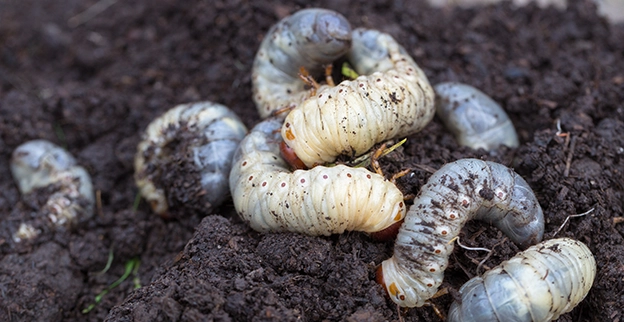
White grubs are the larval stage of several beetle species active in Middle Tennessee, including Japanese beetles, northern masked chafers, green June beetles, and black turfgrass ataenius. Each follows roughly the same cycle: adult female beetles lay eggs in the soil during summer, larvae hatch and begin feeding on grass roots through late summer and into early fall, then burrow deeper to overwinter before returning to the surface the following spring. Fescue lawns in the North Nashville area take the hardest hit because the timing of larval feeding lines up with the stretch when cool-season turf is already dealing with heat stress and reduced root depth from summer.
Lawn Pride of North Nashville works with both warm-season grasses like bermuda and zoysia and cool-season fescue, since many North Nashville-area lawns carry a mix of both. Treatment timing and product selection differ depending on which grass type dominates your yard. Warm-season grass like bermuda shows grub damage differently than fescue: the turf often stays green longer before collapsing, because bermuda's lateral growth can mask root damage for a few extra weeks. Our team adjusts the inspection, timing, and treatment based on what we find in your yard, not a standard template. That's what separates targeted pest care from a generic spray-and-bill approach.
Your One-Stop Solution for Pest Removal & Grub Control in North Nashville, TN
Our Process for Grub Control in North Nashville
The first step in our grub control process is a thorough lawn inspection. We look for the telltale physical signs: irregular brown patches that pull back from the soil like loose carpet, spongy turf that gives underfoot, and concentrated bird or animal digging in the same spots. Raccoons, skunks, and starlings will tear up a lawn to get at grubs they can smell a few inches below the surface, so active digging concentrated in one area of your yard is a strong indicator worth checking before the damage spreads. We pull back sections of the turf to examine the root zone directly and count larval activity per square foot before recommending a treatment plan.
Preventive grub control is the most reliable approach for North Nashville homeowners. Applied between late spring and mid-summer, preventive products move through the soil systemically and reach larvae in the root zone before they establish and begin feeding in earnest. Products containing imidacloprid or chlorantranilipole work at the early larval stage, stopping root damage before it starts. For yards that had grub problems the previous season, preventive treatment each year is worth the cost compared to the expense of lawn repair following a heavy infestation.
Curative treatments are the option when an active grub infestation is already underway. These contact products work best while soil temperatures keep larvae feeding near the surface, generally between late August and mid-September in the North Nashville area. Carbaryl and trichlorfon are two commonly used curative products, and both require adequate soil moisture to carry them into the root zone where larvae are actively feeding. Applying curative products after mid-October rarely produces good results because grubs have burrowed past the depth where reliable contact is possible.
North Nashville yards with recurring grub pressure often share a few common conditions: thatch layers thicker than half an inch, areas that stay consistently moist, and compacted soil that hasn't been aerated in a couple of seasons. Beetles prefer to lay eggs in lush, well-irrigated turf, which means an overly green, heavily watered lawn in June and July can actually draw more egg-laying activity than a drier one. Pairing grub control with core aeration helps break that cycle by reducing thatch depth and improving drainage, making the soil less attractive to laying beetles in the first place. Yards in Goodlettsville, Madison, and other areas with heavier clay soils hold moisture longer at the surface, which tends to raise grub pressure compared to sandier profiles.
Our Special Offers
We understand your goal to keep your lawn looking its best. We take pride in your lawn because we know you do, too. Check out our special offers to see how you can save on your next lawn care application.
-
CLAIM OFFER

75% Off First Application + 2 Surface Insecticide Treatments Included
Expires: 09/30/2026Limit One. Not valid with any other offer. Valid only at participating locations. Locally owned and independently operated franchise companies. Other restrictions may apply. Dwyer Franchising LLC. 1010 N. University Parks Dr., Waco, TX 76707. For additional terms, visit: neighborly.com/terms-of-use
-
PRINT OFFER
5% Senior Citizen Discount
Expires: 09/30/2026Offer available to new customers who enroll in a multi-treatment program with automatic payment. Minimum number of treatments required may vary by location. Pricing and service availability are based on lawn size and geographic area. Limit One. No Cash Value. Not valid with any other offer. Valid only at participating locations. Locally owned and independently operated franchise companies. Other restrictions may apply. For additional terms, visit: neighborly.com/terms-of-use
-
PRINT OFFER
5% Military Discount
Offer available to new customers who enroll in a multi-treatment program with automatic payment. Minimum number of treatments required may vary by location. Pricing and service availability are based on lawn size and geographic area. Limit One. No Cash Value. Not valid with any other offer. Valid only at participating locations. Locally owned and independently operated franchise companies. Other restrictions may apply. For additional terms, visit: neighborly.com/terms-of-useExpires: 09/30/2026
Services We Provide
Customer Reviews
View All Reviews-
 Service: Lawn Services
Lawn Pride has taken the responsibility off my hands and they’ve done a fantastic job. My lawn looks great, my technician is knowledgeable and friendly. Love that fact I can relax and know my lawn is in good hands with a great company.
Abe H. -
Service: Lawn Services
Lawn Pride is extremely attentive to each lawn’s needs. They’re extremely thorough and I’ve recommended them to several friends. My lawn looks like a commercial, and they’ve nurtured new seed and sod into a healthy yard, while stressing the maintenance. Highly recommended.
Ryan S. -
Service: Lawn Services
They always let me know what they were doing with each application and what I should and shouldn’t do for the next week (e.g. don’t mow the lawn for 2 days, etc.) Any time I have called with a question, I received an immediate response.
Candice R. -
Service: Lawn Services
Lawn Pride has been great so far! They always call and let me know when they will be there so it’s never a surprise. Very friendly staff and very pet cautious with their treatments.
Chris C.

The Neighborly Done Right Promise® delivered by LawnPride®, a proud Neighborly company.
Lawn Pride of North Nashville
Our specialists deliver the level of lawn care you need and deserve. We're preferred providers of North Nashville lawn care, distinguished by our commitment to ensuring our customers understand our processes and are thrilled with the results. You can count on Lawn Pride to provide exceptional customer care as we develop a lawn that makes you proud. Lawn Pride of North Nashville provides lawn care services for the following cities:
- Bellevue
- Clarksville
- Goodlettsville
- Hendersonville
- Hermitage
- Joelton
- Madison
- Nashville
- Old Hickory
- Whites Creek
Why Choose Lawn Pride of North Nashville for Grub Control
Lawn Pride of North Nashville backs every service with the Neighborly Done Right Promise®. If something's off, we come back and make it right. No runaround, no waiting weeks for a callback. Our team covers North Nashville neighborhoods year-round, from Hendersonville lawn care and Old Hickory to Goodlettsville lawn care, Hermitage, Madison, and Bellevue, and we see the grub pressure patterns specific to each area every single season.
Timing is where grub control either works or fails. Apply a preventive product too early and it breaks down in the soil before eggs hatch. Apply curative treatment after the window closes and the larvae are already too deep for surface contact to matter. We schedule treatment based on local soil temperature data and beetle activity trends in the North Nashville area, not a one-size-fits-all date on a calendar. That puts the application where it will do the most good for your lawn.
Lakeside properties near Old Hickory Lake in Hendersonville and Hermitage see higher grub activity because moist soil near water is exactly what female beetles prefer for egg-laying sites. That local detail shapes how we plan each inspection and whether we lean toward preventive or curative product timing. Your neighbor's yard and your yard may need different treatment windows even if they look similar at the surface, and our team accounts for that in every recommendation. We don't guess. We look at the lawn, check the soil, count what's there, and go from what we find.
Frequently Asked Questions About Grub Control in North Nashville

Join Our Team
“We have the power to make things better.” That’s our mantra, not only for our customers' lawn issues, but also you, a future team member! At LawnPride, we provide a career path for growth and treat you like family. They know that a happy, motivated team is key to serving customers well. That's why we value integrity and respect and create a strong work ethic.