Our full-service list covers what Patchogue lawns actually need, not a generic package built for inland markets. Core services include lawn fertilization, weed control, aeration and overseeding, grub control, insect control, disease control, and a 7-step fertilization program that spans the growing season. Tree and shrub care adds deep-root fertilization, tree spraying, and plant health care for ornamental plants. Deer repellent and anti-desiccant sprays protect your landscape through winter. Services we don't provide include mowing, hardscape, irrigation, sprinkler system installation, tree removal, or thatch removal. If you're looking for a one-stop yard service, we're the specialists you bring in for the health and science side of your lawn.
Patchogue's growing season runs roughly from April through October, but year-round care is what separates a struggling lawn from a healthy one. Our 7-step fertilization program delivers the right nutrients at the right time, supporting steady growth without the surge-and-crash cycle that comes from over-fertilizing in summer heat. Each step in the program is timed to align with Suffolk County's coastal growing conditions, not a generic national schedule.
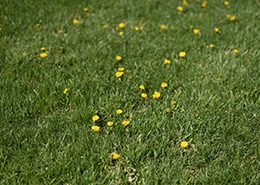
Lawn Fertilization and Weed Control: Our core fertilization program provides your grass with the nutrients it needs at every growth stage. We pair each fertilization visit with targeted weed control, applying pre-emergent herbicides before soil temperatures reach 55°F to prevent crabgrass from germinating. Post-emergent treatments handle established broadleaf weeds and problem weeds that slip through. Sandy soil in Patchogue warms quickly in spring, so timing matters more here than in inland areas where soil temperature rises slowly.
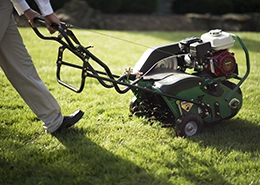
Aeration and Overseeding: Soil compaction is a year-round issue on Long Island properties, especially in high-traffic areas and lawns with a thatch layer that traps moisture. Core aeration pulls plugs from the ground, opening pathways for water, air, and fertilizer to reach the root system. We follow up with overseeding using grass varieties selected for coastal salt tolerance and your property's specific sun and shade conditions. Fall is the prime window, September through October, when soil stays warm enough for germination, but air temperatures reduce stress on new seedlings.
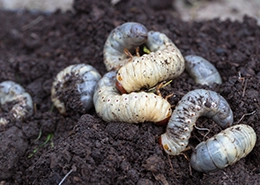
Grub Control: Japanese beetle grubs are a serious problem throughout Suffolk County. Adults lay eggs in summer, and grubs feed on grass roots from late summer through fall, creating dead patches that peel back from the soil like a rolled carpet. Preventive grub control applied in late summer targets the grub life cycle before damage becomes visible, saving you from costly turf repair in the fall.
Insect and Disease Control: Brown patch disease spreads fast in Patchogue's humid summers, especially when nighttime temperatures stay above 70°F near the water. We prevent fungal outbreaks with properly timed fertilization, aeration to improve air circulation, and fungicide applications during high-risk windows in July and August. Our pest management program also Lawn Fungicide Program in Bay Shore, NY addresses surface insects such as chinch bugs and billbugs that thin turf during dry stretches.
Tree and Shrub Care: Healthy trees and shrubs frame your lawn and add real value to your property. Our plant health care program covers deep-root fertilization for trees and shrubs, seasonal spraying for scale insects and other pests common in coastal Suffolk County, and anti-desiccant treatments for evergreens exposed to salt spray and drying winter winds. Arborvitae, yews, and pines near roads or the bay are particularly vulnerable, and our winter protection program gives them a fighting chance against road salt and harsh weather.
Deer repellent rounds out our seasonal offering. Suffolk County deer populations are high, and they're drawn to well-maintained, well-fed landscapes. We apply scent and taste deterrents on a regular schedule to keep them moving past your property instead of through it. For high-value ornamentals, we can recommend physical barriers as a supplement to chemical deterrents during peak browse seasons in late fall and early spring.