
Are Armyworms Ruining My Indianapolis Lawn?
Armyworms are fast-moving caterpillars that strip turf down to bare stems during late summer and early fall across Central Indiana. They get their name from moving in large, coordinated groups across lawns, pastures, and fields. If your grass turns brown overnight, armyworms belong on the short list of suspects.
Lawn Pride of Indianapolis can inspect active armyworm infestation sites, apply targeted treatments, and help your lawn recover.
What Are Armyworms and Fall Armyworms?
Armyworms are the larval stage of several species of moths. The caterpillar stage is the one that feeds on turf, forage grasses, cereal crops, and more than 300 plant species total. Two species matter most in Indiana: the true armyworm (Mythimna unipuncta), a common crop pest active in early summer, and the fall armyworm (Spodoptera frugiperda), now the primary lawn-damaging species in the state.
Fall armyworms cannot survive Indiana winters. Adult moths migrate long distances from warmer regions like Florida and Texas each year, often riding late-summer storm fronts into the Indianapolis area. Once they arrive, female moths lay eggs on lawn grasses, tender foliage, and nearby structures, and the cycle of lawn destruction begins. Fall armyworms feed on forage grasses, pasture grasses, and cereal crops such as corn, wheat, and soybeans, making them a threat to both residential turf and agricultural land near the city.
How Armyworms Damage Lawns, Forage Grasses, and Cereal Crops
Armyworm larvae in the caterpillar stage are actively feeding machines. They primarily damage grasses and cereals, and infestations can develop rapidly, leading to crop and turf losses within days.
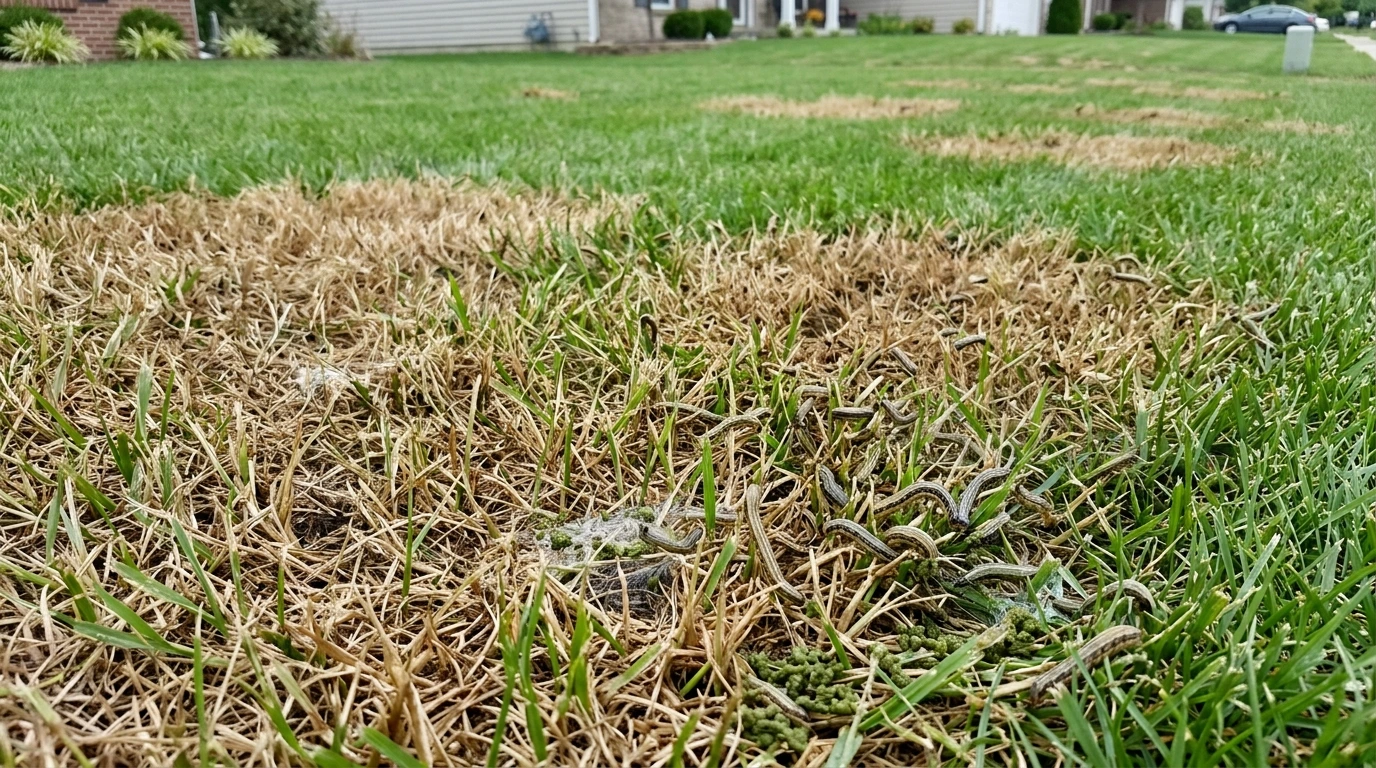
Early damage symptoms on lawns include chewed tips, ragged leaf edges, and small thinning patches that resemble drought stress at first glance. The first sign is often a patch of turf that looks slightly off-color or light green rather than dead.
Advanced armyworm damage shows as rapidly expanding brown or scalped areas where blades are eaten to the crown. Armyworm outbreaks can lead to complete defoliation of crops overnight, and the same pace applies to turf grasses. A large armyworm infestation can leave sections of an entire lawn completely defoliated in one to two days. Fall armyworms prefer warm-season grasses like bermuda grass, but they feed aggressively on cool-season lawn grasses as well, including tall fescue and Kentucky bluegrass.
On agricultural land near Indianapolis, fall armyworms also damage crops like corn, wheat, and soybeans. Late-instar larvae can completely defoliate young corn plants. Armyworms can cause severe defoliation of plants and economic losses in agriculture from crop damage, affecting seed heads, forage yield, and grassy pastures.
The good news: if crowns and roots survive, cool-season turf grasses recover once feeding stops, especially with proper watering, fertilization, and fall overseeding.
How to Find Fall Armyworms in Your Lawn
Early scouting is the single most effective step to prevent severe damage. You can find fall armyworms before they strip large areas if you know where and when to look.
Visual scouting: Inspect where green turf meets brown patches during early morning or early evening, when larvae feed near the surface. Gently part the grass and examine the soil surface and thatch for caterpillars, frass, and chewed blade remnants. During daylight hours, larger larvae often hide in thatch or just below the soil surface.
Soap-flush test: Mix 1 to 2 tablespoons of dish soap per gallon of water, pour it over about one square yard, and watch for larvae surfacing in 5 to 10 minutes. A sweep net dragged through turf also works for sampling.
Early warning signs: Increased bird activity (robins, starlings feeding heavily in one area) and moth activity around outdoor lights in late summer and early fall signal incoming eggs. Armyworm outbreaks often occur in cool, wet conditions following storm systems, which trigger outbreaks by carrying moths northward.
The treatment threshold is 2 to 3 larvae per square foot when feeding damage is visible. Focus scouting on recently seeded lawns, irrigated turf, sports fields, and areas adjacent to crop fields, which attract egg-laying female moths. Regular monitoring can help detect armyworm infestations early, before full grown larvae cause irreversible turf loss.
Armyworm Treatment Options for Indianapolis Lawns
Treating armyworm larvae while they are small (under ¾ inch) stops feeding damage quickly and gives the lawn time to rebound before other species of pests or disease move in.
Contact insecticides labeled for fall armyworm control in turf include:
- Bifenthrin: fast-acting pyrethroid that knocks down larvae on contact.
- Lambda-cyhalothrin: another pyrethroid option; bifenthrin and lambda-cyhalothrin are viable insecticide options for active infestations.
- Spinosad: effective against fall armyworms, especially when larvae are young. Slower than pyrethroids but more selective.
- Acelepryn G: provides season-long control when applied in spring as a preventive measure.
Insecticides should be applied when larvae are visible and actively feeding. The ideal window is early evening or early morning. Light irrigation before treatment moves larvae up into the canopy for better contact. Avoid heavy watering for 24 hours after application if the insecticide label directs. Apply insecticides before rain for maximum effectiveness; a washoff reduces residual contact time.
Once older larvae exceed about 1 inch, chemical control becomes less effective and most damage is already done. To kill armyworms efficiently, act during early instars. Biological options like Bacillus thuringiensis (Bt) and beneficial nematodes work on small larvae under favorable conditions but are slower.
Lawn Pride of Indianapolis applies professional-grade surface insect control as part of customized programs, selecting materials and rates appropriate for local conditions, pet safety, and nighttime feeding patterns. Always follow all insecticide label directions.
How Lawn Pride of Indianapolis Can Help Protect Your Lawn
Our 7-application lawn care program combines fertilization, weed control, aeration and overseeding, and surface insect control to maintain a healthy lawn that withstands armyworm feeding. When an active infestation appears, Lawn Pride offers targeted treatments plus follow-up visits to monitor armyworm damage and recovery.
For homeowners and HOAs, working with Lawn Pride means consistent professional monitoring, seasonal adjustments based on real-time weather, and access to discounts and special offers when enrolling in year-round lawn care programs.
The sooner you scout and treat, the less turf you lose. Request your free estimate from Lawn Pride of Indianapolis online or by phone to schedule an inspection, get treatment for active armyworms, and lock in a lawn health plan that protects your turf through every season.