
Neglected trees and shrubs are more than an eyesore. Dead limbs hanging over a roof or driveway become safety hazards during thunderstorms. Weakened ash trees hollowed out by emerald ash borer can drop without warning. On the other hand, a well-maintained landscape boosts curb appeal, increases property value, and provides shade that lowers cooling costs all summer. Proper tree and shrub care in Indiana requires matching plant needs to local soil conditions, and that starts with understanding what your plants face in each season.
Lawn Pride of Indianapolis is a local lawn care and shrub care provider that coordinates tree and shrub treatments with existing lawn services for a full-property approach.
Recognizing When Your Trees and Shrubs Need Professional Help
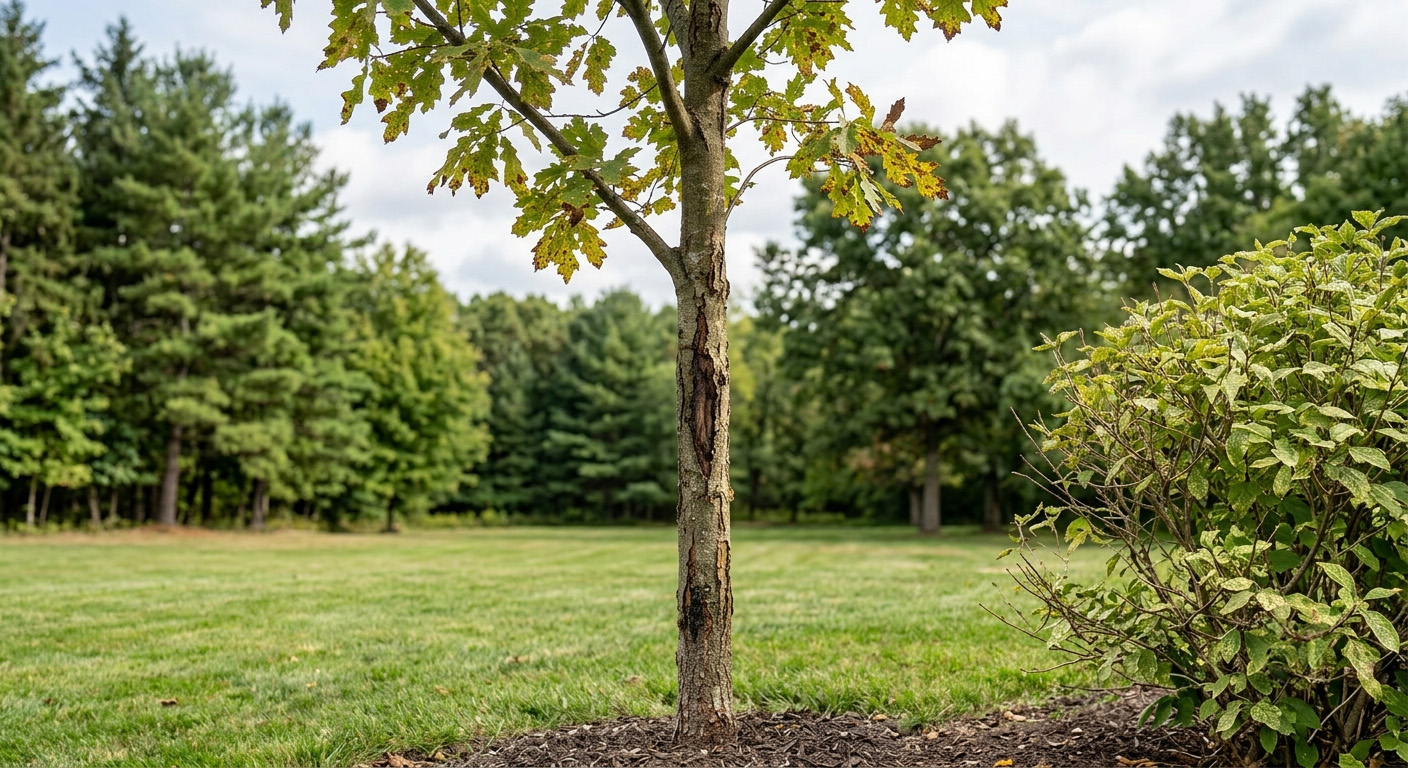
Maintaining healthy trees isn't just about aesthetics - it's about protecting your property investment and ensuring the safety of your family. Indiana's climate presents unique challenges for tree health, from harsh winter storms to humid summers that invite pests and diseases. Without proper routine tree service, even the most beautiful oak or maple can become a liability rather than an asset. Here's what to watch for on your property:
- Dead or hanging branches after spring thunderstorms - these can fall unexpectedly and damage your house, car, or fence
- Thinning canopies where you can suddenly see through a tree that was once dense
- Discolored or yellowing leaves during the growing season, especially yellowing between leaf veins (a sign of chlorosis common on maples and oak trees)
- Early leaf drop well before fall, which signals root stress, drought damage, or disease
- Visible pests like webbing, sticky honeydew residue on leaves, or clusters of insects on stems
- Bark cracks or splits from late winter freeze-thaw cycles, which can invite fungal infection
- On ash trees specifically: D-shaped exit holes in bark, heavy woodpecker activity, and branch dieback starting at the top of the canopy - all signs of possible emerald ash borer infestation
When to call in the professionals: Light shrub care like shaping boxwoods, watering, and mulching are tasks most homeowners can handle. But if you spot branches near power lines, need large tree removal, or notice unexplained rapid decline across multiple plants, it's time to call local tree services or certified arborists for diagnosis and safe intervention.
Seasonal Tree and Shrub Care Calendar for Central Indiana
A well-planned tree maintenance schedule addresses challenges before they become costly problems. Indiana homeowners should think in four seasonal windows - late winter, early spring, summer, and fall - because timing directly affects plant health care and disease control success.
- Late winter (February–early March): Structural pruning is ideal now because seeing structural problems is easier during dormancy. Apply dormant oil to smother overwintering insects like aphids and scales before they emerge. Begin planning for tree and shrub fertilization. Transplant trees in late winter, early spring, or fall when roots can establish without heat stress.
- Early spring (mid-March–April): Conduct first plant health care inspections to catch winter damage. Apply pre-emergent weed control in landscape beds. Schedule deep root fertilization for trees and shrubs to support new growth as buds swell. Regular inspections help catch pest and disease problems early in Indiana.
- Summer (May–August): Monitor for insects and diseases - humid conditions fuel problems fast. Water deeply during heat waves (details below). Perform corrective pruning on storm-damaged limbs only; avoid heavy pruning that stimulates vulnerable new growth in extreme heat.
- Fall (September–early November): This is the second main window to fertilize trees and shrubs. Fall fertilization should occur before the ground freezes to support root development and cold hardiness. Providing adequate moisture before winter helps trees withstand cold. Evaluate storm damage and plant new trees and shrubs while soil is still warm. Avoid planting in poorly drained sites to prevent root problems.
Lawn Pride can synchronize tree, shrub, and lawn services so fertilizer and weed control applications don't overlap or conflict across your yard.
Fertilizing Trees and Shrubs in Indiana Soils
In natural forests, fallen leaves and twigs decompose and cycle nutrients back to tree roots. In residential neighborhoods, homeowners rake leaves, blow debris, and maintain turf that competes directly with tree and shrub roots for water and nutrients. That organic matter never returns to the soil.
Indiana's soils range from alkaline clay in the north to acidic soils in the south. Around Indianapolis, Westfield, and Noblesville, heavy clay soils compact easily, limit oxygen to roots, and can be low in available nutrients - especially in newer subdivisions where topsoil was stripped during construction. Soil tests are important for determining soil pH and nutrient needs before applying any fertilizer. Native species are best adapted to Indiana's rainfall patterns and soil chemistry, but even they benefit from supplemental nutrition in managed landscapes.
Lawn Pride of Indianapolis offers shrub care services that deliver nutrients where roots can actually reach them, supporting resilient growth across the growing season.
Timing & Techniques for Pruning Trees and Shrubs
Correct pruning keeps trees and shrubs safer, more attractive, and less prone to storm damage and disease. It also encourages healthy growth by directing energy toward strong branch structure rather than crowded, crossing limbs. But timing matters - pruning at the wrong time can spread disease or remove next year's flowers.
- Prune trees in late winter to early spring for most deciduous species. Dormant pruning reduces disease spread and lets you see the branch structure clearly without leaves in the way.
- Summer touch-up pruning works for fast-growing shrubs and hedges that need shaping, but keep cuts light to avoid stimulating tender new growth that won't harden off before winter.
- Special timing applies to certain species: tree pruning on oak trees should happen only in winter to reduce oak wilt risk, a serious fungal disease spread by insects during warmer months. Pruning should be done after spring flowering shrubs finish blooming - lilacs, azaleas, and magnolias set next year's buds on old wood, so cutting them in fall or late winter removes the flowers you're waiting for.
- Safety rule: homeowners can handle light thinning of small shrubs, but large limb removal, canopy thinning, and tree trimming near structures or power lines should be left to local tree services or ISA certified arborists who carry proper insurance and equipment.
- Over-pruning stresses plants and invites disease. A professional should guide how much to remove from mature shade trees versus foundation shrubs - the general rule is never more than 25% of the canopy in a single season.
Insects, Diseases, and Ash Tree Protection in Indiana
Indiana's humid summers and dense urban plantings create ideal conditions for common pests and fungal diseases on trees and shrubs. A targeted approach to disease management and insect control protects your landscape before visible damage becomes irreversible.
Common tree pests in Indianapolis include spider mites and scale insects, along with aphids and bagworms. Look for fine webbing on leaf undersides (spider mites), sticky honeydew on leaves and stems (aphids and scale), or brown bag-like structures hanging from branches (bagworms). Additionally, leaf spot, powdery mildew, and rust can defoliate shrubs and trees without proper disease control. These fungal problems thrive in warm, humid weather and are especially common on maples, oaks, and densely planted ornamental shrubs.
A plant health care program includes pest management and soil monitoring, combining inspection, targeted insect and disease control, and proper fertilization to build resilience in your woody plants. Lawn Pride can help coordinate timing of insect and disease control on shrubs with lawn pest control treatments for grubs and surface insects, so your entire yard gets consistent protection.
Integrating Tree, Shrub, and Lawn Care for a Healthier Property
Your lawn, trees, and shrubs all share the same soil and water supply. What you do for one affects the others, which means a disconnected approach often creates problems - over-fertilized grass, stressed tree roots, or shrubs that can't compete for moisture.
- Thick, well-managed turf from professional lawn care services reduces erosion and crowds out invasive weeds that would otherwise compete with trees and shrubs for water and nutrients.
- Pairing shrub care (shrub fertilization and insect management) with a 7-step lawn care program creates consistent, year-round plant health care that keeps your entire yard - grass, shrubs, and trees - on the same schedule.
Lawn Pride of Indianapolis offers bundled lawn care services plus shrub services, so homeowners work with one local team and one office staff contact instead of juggling multiple providers. The result is a healthy yard where every element supports the others.
Other Landscape Services That Support Tree & Shrub Health
Some lawn services have big benefits for trees and shrubs by improving overall soil conditions and reducing stress across your landscape.
- Lawn aeration and overseeding in fall relieves compaction that can suffocate tree and shrub roots along driveways and in high-traffic yard areas. Compacted soil blocks oxygen and water from reaching roots - opening it up helps everything grow.
- Grub and surface insect control in turf reduces secondary wildlife and pest pressure that can damage roots and bark. Moles follow grubs, and their tunneling disrupts shallow root systems of nearby shrubs.
- Weed control in landscape beds eliminates competition for water and nutrients around ornamental trees and shrubs, helping them thrive rather than struggle.
- Regular lawn fertilization and pH management support the overall soil ecosystem where roots from trees, shrubs, and grass all interact. Adding organic matter through topdressing or mulching further improves soil structure over time.
Lawn Pride of Indianapolis can build a tailored plan combining lawn care, shrub care, and appropriate timing for tree-focused services - all managed by one great company and one team that knows your property.
Getting Started: Scheduling Tree & Shrub Care with Lawn Pride of Indianapolis
You don't need to be an expert to protect your landscape. Starting with a professional evaluation is enough. A great service provider will walk your property, identify risks, and recommend a plan tailored to your soil, your plants, and your budget.
Request a free estimate by phone or online form for shrub care services and lawn care programs in Indianapolis and nearby suburbs including Carmel, Fishers, Greenwood, Westfield, and Noblesville. Message frequency varies based on the services you select, and standard data rates may apply for text communications.