
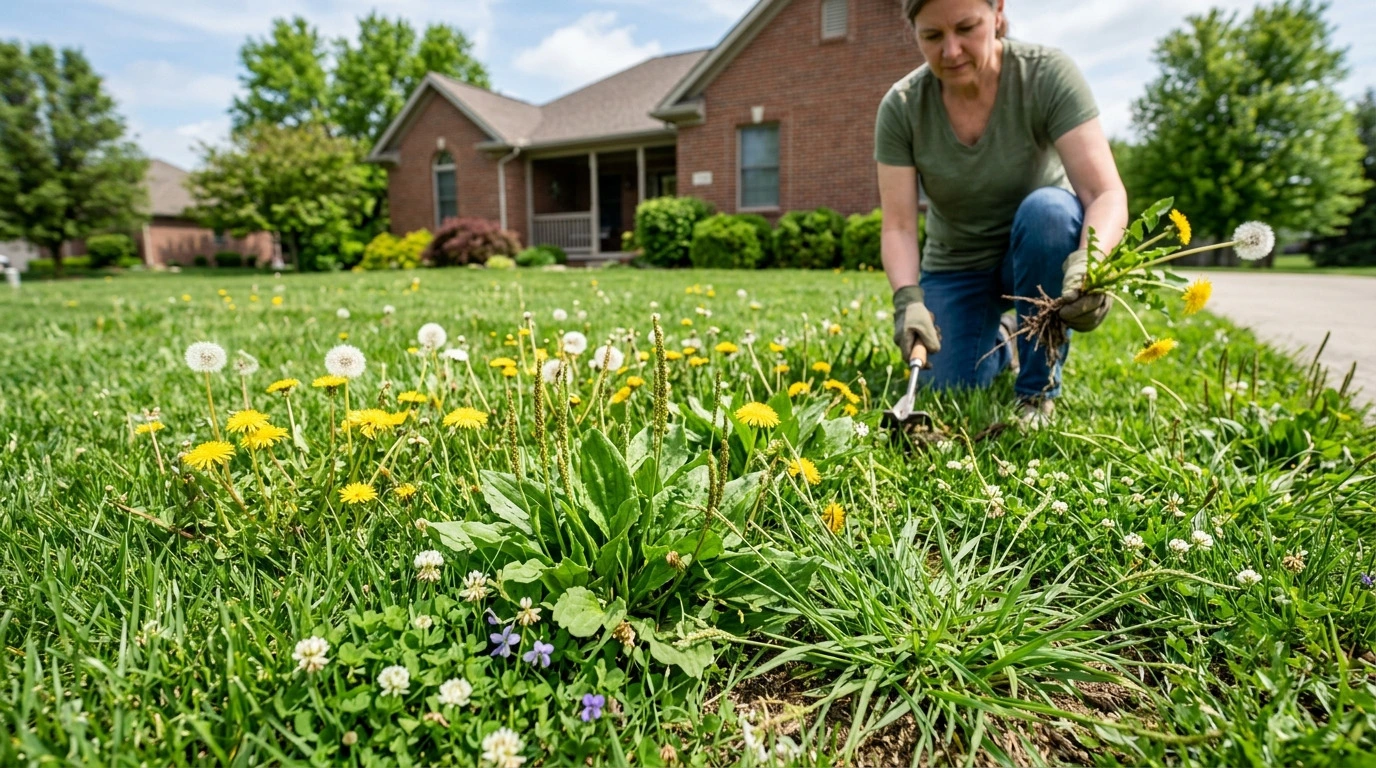
If you live in Indianapolis, Carmel, Fishers, Greenwood, Avon, Brownsburg, Noblesville, or Westfield, you already know the frustration: weeds keep showing up in your lawn no matter what you do. Central Indiana's climate and soil conditions create the perfect environment for weeds to thrive, especially when cool season grasses slow down during summer heat. The good news is that consistent, well-timed weed control can turn things around.
Most Indiana lawns grow Kentucky bluegrass, perennial ryegrass, or turf-type tall fescue. These grasses fight weeds best when they are thick, properly fertilized, and watered correctly. When any of those factors slip, weeds move in fast. Common weeds managed across central Indiana include:
- Crabgrass, foxtail, and barnyardgrass
- Dandelions, clover, and broadleaf plantain
- Chickweed, henbit, and speedwell
- Creeping Charlie (ground ivy) and wild violet
- Nutsedge, spurge, and purslane
Why Indiana Lawns Get So Many Weeds
Central Indiana sits in USDA Hardiness Zones 5b through 6a. That means cold winters with freeze-thaw cycles, wet springs, hot and humid summers, and unpredictable fall temperatures. Each of these stressors weakens turf, opens gaps in the canopy, and gives weeds a foothold.
Compacted soil makes the problem worse. Many Indianapolis subdivisions built since the 1990s sit on heavy clay or construction fill. Compacted soil limits root growth, reduces water infiltration, and creates conditions where broadleaf weeds and grassy weeds thrive while healthy grass struggles.
Here are the main reasons weeds keep invading Indiana lawns:
- Thin, under-fertilized turf lets sunlight reach bare soil, triggering weed seed germination in patchy areas.
- Soil compaction from foot traffic, pets, and mowing equipment restricts deeper root growth and limits access to vital resources like water and oxygen.
- Inconsistent lawn care habits such as irregular mowing height, skipping fall fertilization, and never scheduling core aeration allow weeds to gain ground year after year.
- Weed seeds constantly arrive from neighbors' yards, farm fields, roadside ditches, wind, and birds, so no yard is ever completely weed-seed free.
- Cool-season grasses do most of their growing in April through early June and September through October, while warm-season annual weeds like crabgrass thrive during mid-summer heat, creating a seasonal mismatch.
- Chronic problems with creeping Charlie, violets, or nutsedge often indicate deeper issues like heavy shade, poor drainage, or the wrong grass species for the site.
Weeds compete with grass for moisture, nutrients, and oxygen, which is why even a few invasive plants can quickly spread if left untreated.
Common Weeds We Control Across Indiana
Proper weed control starts with knowing which weeds are in your lawn. Grassy and broadleaf weeds require different treatments and timing, which is why effective weed management depends on accurate identification. Understanding regional threats such as crabgrass and nutsedge helps determine the right approach.
- Crabgrass and other annual grassy weeds - crabgrass, foxtail, barnyardgrass, and goosegrass thrive in sunny, thin areas along driveways and sidewalks. They germinate from late May through August when soil temperatures reach about 60°F. Pre-emergent herbicides prevent crabgrass and foxtail growth before they ever emerge.
- Perennial broadleaf weeds - dandelions (yellow flowers, white puffballs), clover, plantain, creeping Charlie (purple flowers), and wild violet appear where compacted soil or low fertility weakens turf. Dandelions have deep taproots that require thorough removal or systemic herbicide treatment.
- Cool-season annual broadleaf weeds - chickweed, henbit, and speedwell show up in early spring (March and April) and again in late fall (October and November) when temperatures are cool.
- Moisture-loving or specialty weeds - nutsedge, spurge, and purslane appear in low spots or overwatered areas where drainage is poor.
Lawn Pride technicians are trained to identify these specific weeds on-site and apply the exact targeted treatments required for Indianapolis and surrounding counties, including Hamilton, Marion, Hendricks, Johnson, Boone, Hancock, and Morgan.
How Weed Control Works in Indiana: Pre-Emergent & Post-Emergent
Effective weed control in Indiana is a two-part strategy: stopping new weeds before they sprout and eliminating existing weeds that are already visible. Weed control programs utilize a mix of preventative and curative treatments to cover both angles. Professional services use commercial-grade products for effective weed management that homeowners typically cannot access.
Pre emergent treatments:- Applied to Indianapolis lawns in early spring, usually late March to early April, based on soil temperature rather than calendar dates alone.
- A pre emergent herbicide creates a thin barrier in the soil that prevents crabgrass and other annual weed seeds from successfully germinating.
- Most effective when watered in by rainfall or irrigation shortly after application.
- Selective herbicides target broadleaf weeds like dandelions and clover without harming cool-season turf. Post-emergent weed control targets actively growing weeds during the season when they are most vulnerable.
- Often applied as spot treatments to avoid overusing products and to focus on problem areas.
- Stubborn weeds or large populations may require multiple visits to fully knock back.
Lawn Pride combines pre emergent and post-emergent weed control with lawn fertilization during each visit of its lawn program to encourage a thick lawn that naturally crowds out invasive weeds. Timing in Indiana is critical and is based on actual weather conditions, not just the calendar, to match weed germination and growth cycles precisely.
Seasonal Weed Control Strategy for Indiana Lawns
Cool-season lawns in central Indiana need different weed control tactics throughout the year. Weed control should be done consistently throughout the growing season, and Lawn Pride schedules weed control applications accordingly.
Spring (March–May):- Apply pre emergent for crabgrass and other annual weeds before soil temperatures consistently reach 55–60°F.
- Treat overwintered broadleaf weeds like dandelions, chickweed, and clover with selective herbicides.
- Provide balanced lawn fertilization for strong green-up and optimal growth without pushing excessive top growth.
- Maintain proper mowing height around 3 to 3.5 inches to shade soil and discourage new weeds from germinating.
- Focus on spot treating breakthrough weeds that escaped spring pre emergent treatments.
- Monitor for early signs of summer annual weeds and nutsedge in low or wet areas.
- Adjust fertilization to avoid stressing turf during heat waves while maintaining color and thickness.
- Target persistent broadleaf weeds like creeping Charlie and wild violets while they are actively storing energy in their roots, making fall treatments especially effective.
- Apply fertilizer to rebuild root systems after summer stress, supporting stronger roots heading into winter.
- Combine weed control with core aeration and overseeding where needed to thicken thin lawns and fill patchy areas.
- Apply a late-season winterizer fertilization to help grass store vital nutrients and outcompete weeds the following spring.
- Visible weed activity slows, but the soil health and fertility steps taken now pay off in next year's weed control season.
Lawn Pride's 7-Application Weed & Lawn Care Program
Lawn Pride of Indianapolis has developed a 7-Application Lawn Care Program specifically timed to Indiana weather and weed cycles. Consistent multi-visit programs are more effective than one-time applications because they address weeds and turf nutrition across every phase of the growing season. Lawn care programs typically involve 6 to 8 treatments per year, and Lawn Pride's approach fits squarely in that range.
The program's goals are straightforward: consistent weed control, steady lawn fertilization, insect control when needed, and season-long density and color. Here is a general overview of what the seven visits cover:
- Early spring: pre-emergent plus fertilizer plus broadleaf weed control
- Late spring: reinforcement for the crabgrass barrier plus weed control plus nutrition
- Early summer: targeted weed control plus balanced fertilization plus surface insect monitoring
- Mid-summer: spot treatments for weeds, heat-adjusted fertilization, insect control if needed
- Early fall: weed control for broadleaf weeds plus fertilization for root growth
- Late fall: weed cleanup with heavy emphasis on root-building fertilization
- Optional early spring tune-up depending on conditions and program version
Surface insect control is included in two weed control applications within the program. Lawn Pride's core lawn maintenance program is built specifically to address the turf types, soil needs, and weed pressures common to Central Indiana. Weed control services typically range from $50 to $180 per treatment in Indiana, and annual programs for full seasonal weed control typically cost between $300 and $900 depending on lawn size and services selected.
Beyond Weeds: Fertilization, Core Aeration, and Pest Control
Long-term weed reduction is not just about spraying weeds. A healthier lawn starts with improving your lawn's health through fertilization, aeration, overseeding, and pest control. Comprehensive lawn care programs help prevent invasive weeds from gaining a foothold in the first place.
Fertilization
- Slow-release fertilizers provide balanced nutrient release that feeds cool season grasses steadily without forcing rapid, weak growth. Turfgrass requires extensive fertilization to thrive across Indiana's demanding seasons.
- Properly fertilized turf fills in thin spots with new growth, making it harder for weeds to establish. Healthy lawns crowd out weeds through proper fertilization. Weed and feed programs combine fertilization with broadleaf weed control applications for a comprehensive approach.
- Fertilization helps grass resist pests and diseases, keeping your yard resilient through summer stress and fall recovery.
Core Aeration and Overseeding
- Core aeration removes small plugs of soil to relieve compaction, especially in the heavy clay soils common around Indianapolis. Aeration creates holes in the soil for better air and water flow, and regular aeration can enhance lawn health and density significantly.
- Aeration improves grassroots by reducing soil compaction, and liquid aeration enhances root growth and nutrient uptake in grass. Overseeding replenishes thin or bare areas with quality grass seed, and aeration and overseeding should be done together for best results, ideally in fall.
Pest and Insect Control
- Grubs, chinch bugs, and surface insects thin turf by damaging roots and crowns, opening room for weeds. Grub control helps eliminate infestations damaging your lawn. Trained technicians identify and control turf-damaging insects before they cause lasting harm.
- Pest control prevents and eliminates pests around your home, and perimeter pest control can reduce ants, spiders, and other pests near the foundation, improving the outdoor environment for your family.
Safe, Targeted & Eco-Conscious Weed Control Practices
Modern weed control services in Indiana can be both effective and responsible when applied by trained professionals. Lawn Pride uses selective herbicides labeled for use on cool-season turf, meaning they target weeds without harming desirable grass when applied correctly.
Safety practices:- Licensed, trained technicians follow Indiana state regulations for pesticide use, ensuring proper handling of all products.
- Clear instructions are provided about when kids and pets can safely re-enter the lawn, typically after the product has dried.
- Spot treatments are used where possible to limit unnecessary applications and reduce overall product use.
- Building a dense, resilient lawn through fertilization and core aeration naturally reduces weed populations over time, decreasing the need for heavy chemical intervention. Regular lawn care protects and builds property value while supporting a beautiful lawn your family can enjoy.
- Pre emergent treatments that prevent weed seeds from emerging reduce the need for repeated blanket sprays later in the season.
- Calibrated equipment and weather-aware scheduling help minimize drift and runoff risk.
A thoughtful, comprehensive approach to lawn services balances weed suppression with soil health and family safety. Lawn care programs typically include 6 to 8 fertilization treatments that deliver vital nutrients steadily, supporting grass healthy enough to resist weed pressure on its own over time.
Getting Started: Free Quote & Local Indiana Service Areas
If you are ready to see fewer weeds and enjoy a well maintained lawn this season, Lawn Pride of Indianapolis is here to help with customized solutions for your property's unique needs. As a locally owned lawn care service, we understand what Indianapolis lawns and central Indiana yards need to reach their full potential.
Here is how to request your free quote:
- Fill out the online form with your address and basic property information for a fast estimate.
- Call our local Indianapolis office during business hours for a live consultation.
- Quotes are no-obligation and can cover bundled lawn services including weed control, fertilization, core aeration, grub control, fungicide treatments, and pest control.
- Indianapolis, Carmel, Fishers, Noblesville, Westfield, Zionsville
- Greenwood, Franklin, Whiteland, Bargersville
- Avon, Brownsburg, Plainfield, Danville
- Additional nearby communities depending on current route coverage
Pricing depends on lawn size, landscape complexity, existing weed pressure, and whether additional control services like aeration or insect control are selected. Professional weed control services from Lawn Pride save homeowners time, reduce frustration, and help create thick, green lawns worthy of any Indiana neighborhood. Request your free quote today and give your lawn the support it needs across every season.